Some objects stay with us for a lifetime. An inherited table, a chair that has moved from one home to another, or a piece of furniture someone made decades ago that we still use today.
They last because they were well thought out, because their materials stand up to time, because we can repair them and because, in one way or another, they still make sense in our lives.
Perhaps this is where one of the most interesting questions in contemporary design begins: what if designing sustainably meant, first of all, making things worth keeping?
That question ran through Diseñar desde el origen , a gathering in the Un lugar donde pasan cosas series. On 12 November, Pablo Bolumar and Jacobo Taulet , founders of PANAL Beeswax Lighting , joined María Navarro of ADCV around the kitchen at Studio2.
A generation that doesn’t wait for all the answers
María opened the conversation by drawing attention to a generation of designers who research, experiment and question how things are made. At PANAL, that curiosity shapes practical decisions about materials, manufacturing and how long their pieces can remain in use.
Pablo and Jacobo told us that their lighting is attracting interest from interior designers, specialist publications and hospitality businesses. To understand how they got here, we went back to the early experiments and the questions they asked while exploring a material both familiar and unusual: beeswax.
Light the colour of honey
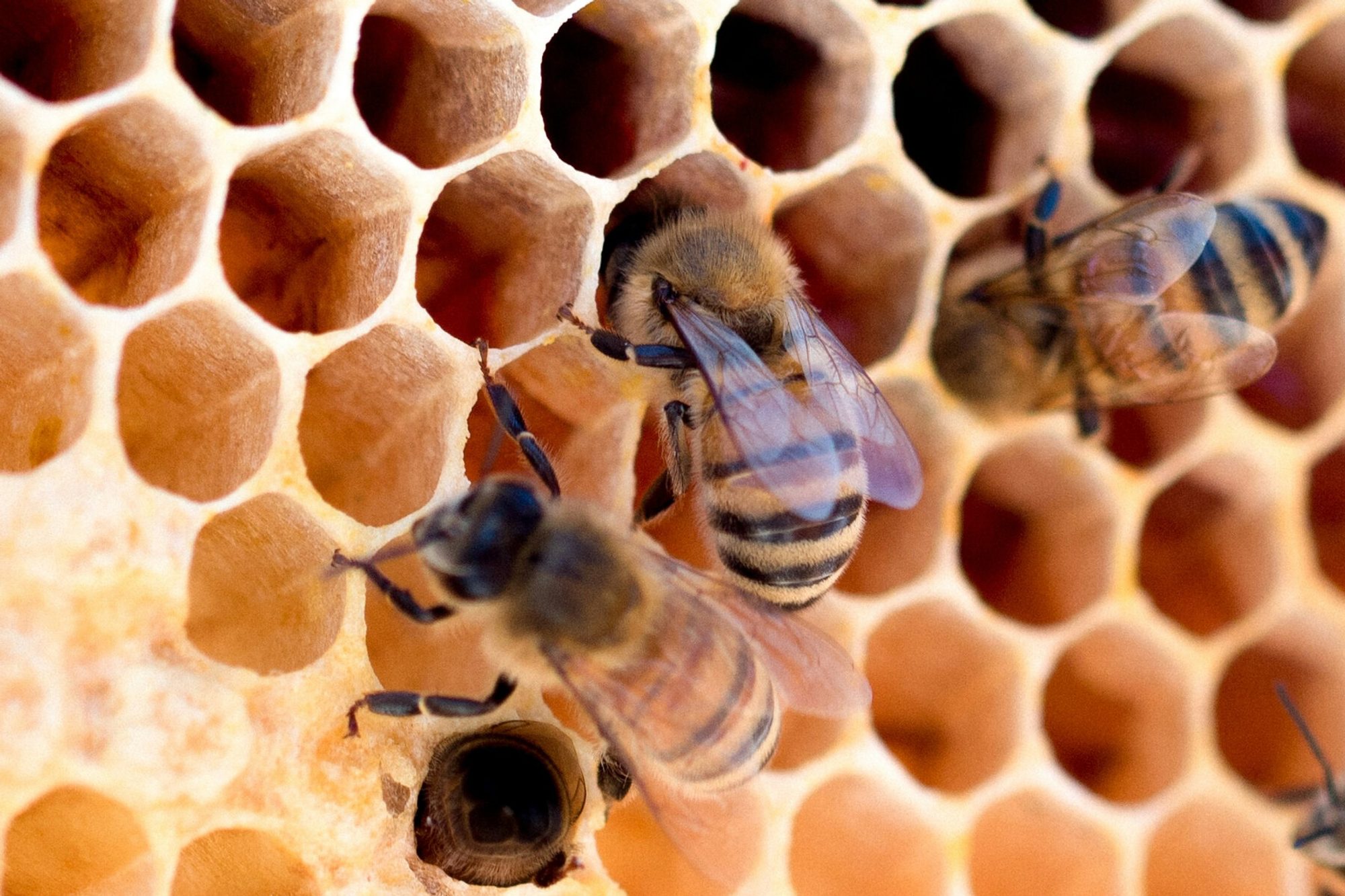
By combining beeswax with textiles, PANAL has developed mouldable surfaces that become shades for their lights. The light takes on a warm, honey-like tone. The material gives the piece its shape and, once the light is switched on, changes the way we experience it.
Two approaches to design come together in the project. Pablo focuses on research and experimentation with materials. Jacobo looks at how the pieces are built, how they work and how they can be maintained and repaired. Together, they address questions that range from the first material test to what happens when a light needs fixing.
A bedside table becomes a beehive
One story from the evening captured that curiosity particularly well. Pablo and Jacobo recalled rescuing a discarded bedside table and adapting it into a beehive. They considered how much space the bees needed and the conditions they would face in summer.
It brought us back to a simple habit of looking: when something has served its original purpose, what other life might it have?
Can design change the way industries work?
Pablo raised a question that widened the conversation. Industrial design has made large-scale production possible and put a wide range of products within reach of more people. It has also helped establish ways of producing and consuming that depend on large amounts of resources.
If design helped build those systems of production, what role could it now play in changing them?
Thinking about a light, a chair or a piece of packaging means looking beyond the finished object: what need it meets, where its materials come from, how it is made and what will happen when it stops working.
Is it sustainable, or does it just look that way?
Words such as natural , eco and sustainable are increasingly common on the things we buy. During the conversation, we asked what we can find out about the processes behind those words: how an object is made, what resources it needs, how far it travels and how long we will be able to use it.
The discussion also put us in the position of the buyer. When something breaks, can we repair it? Do we know who to turn to, or where to find a spare part? These are practical questions that help us judge an object beyond what its label promises.
The value of what lasts
María Navarro brought the conversation back to the social role of design: meeting real needs, improving our relationship with our surroundings and making things that can stay with us for years.
We thought again about inherited furniture that is still in use. About the knowledge it took to choose the wood, work out how the parts fit together and leave room for repairs over time. That experience raises a question that still matters to designers today: how long do we want the things we make to last?
One table, ten people and plenty to share
There were ten of us around the same table. Sitting close made it easy for questions to pass from one person to another and for different generations to share how they research, start a business and work through the difficulties of a project.
We open the Studio2 kitchen to make room for conversations like this. Beeswax led us to talk about the objects we choose to keep and the decisions we make whenever we create something new.
And it left us with a question worth coming back to:
Are we designing things to consume or things to keep?