A city is also built when we look at it together
There are places we pass every day without stopping to look at them: a façade we no longer notice, a square we cross in a hurry, a building whose history we do not know. Yet these everyday spaces ultimately shape our idea of the city. Not only because of how they were designed, but because of what we experience in them, the stories we attach to them and the ways we share them.
A city is not built through urban planning or architecture alone. It is also built when someone opens a building that once seemed inaccessible, when another person tells the story of a familiar corner from an unexpected perspective, or when we ask ourselves why certain places feel like our own. To inhabit a place is to occupy it, but also to interpret it, care for it and take part in its transformation.
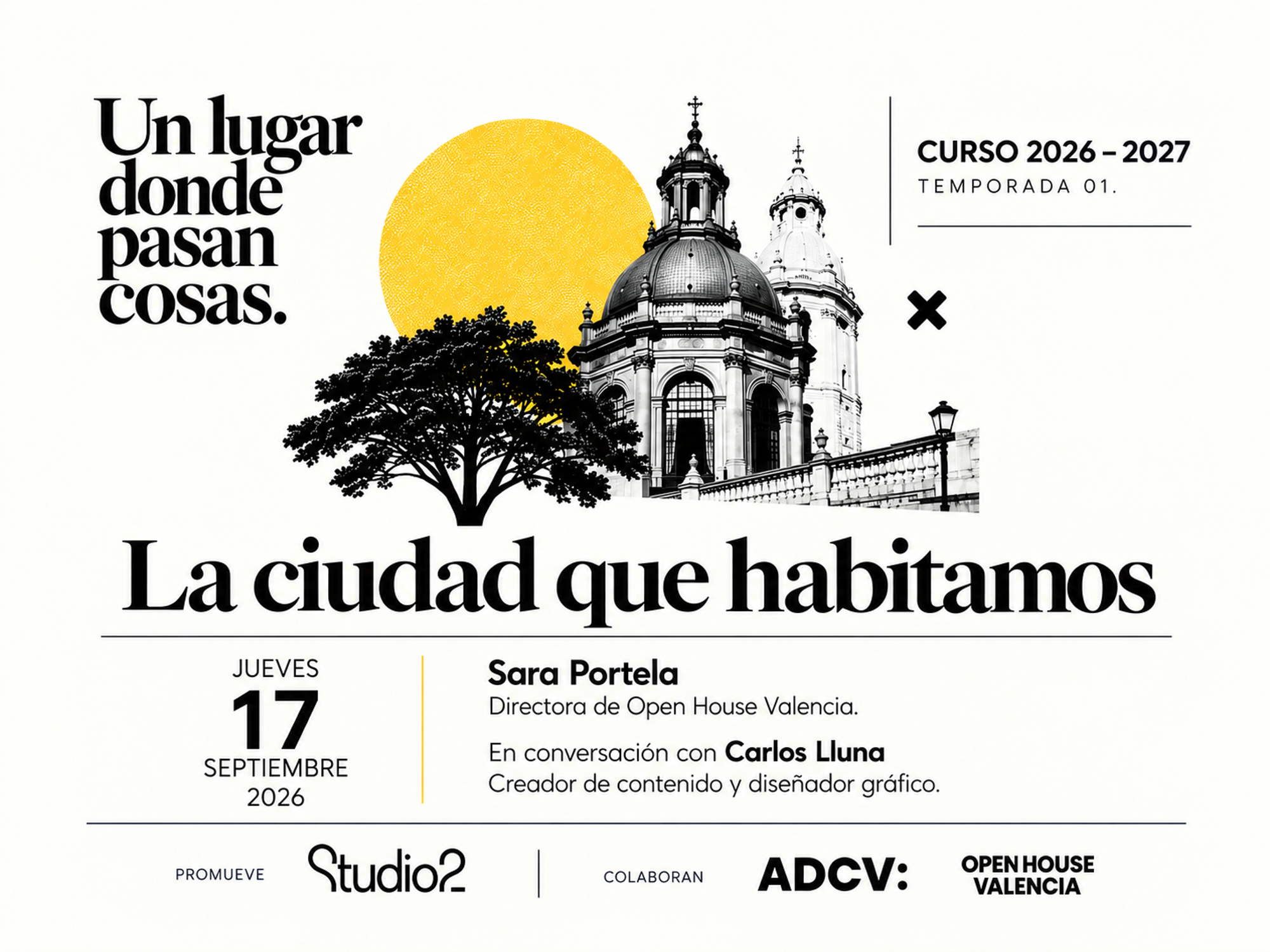
On 17 September, the first conversation in Un lugar donde pasan cosas brings together Sara Portela, director of Open House Valencia, and Carlos Lluna, content creator and graphic designer. Two different ways of observing Valencia meet to discuss architecture, heritage, identity and civic participation.
The conversation begins with a seemingly simple question: how do we build a city beyond its buildings? It does not seek a definitive answer. It invites us to pause, look at Valencia more closely and recognise that its identity does not belong only to those who design or manage it. It is also shaped by those who walk through it, explain it, question it and make it their own every day.
Inhabiting means more than living in a place
Living in a city does not necessarily mean feeling that we are part of it. That sense of belonging emerges through everyday routes, the spaces where we meet and our ability to take part in what happens around us. The conversation between Sara Portela and Carlos Lluna starts from this distinction and asks what makes a place feel like our own.
It also asks whether Valencia offers enough spaces where people can meet without a specific purpose, and how architecture, public space and culture influence the way we relate to one another. We inhabit a city with our bodies, but also through memory, attention and affection.
Opening buildings also opens conversations
For years, Open House Valencia has brought architecture closer to the public through one direct action: allowing people to step inside. When a building opens its doors, it stops being merely part of the landscape and becomes a shared experience. Understanding its history, its use and the decisions that made it possible changes the way we see the city.
This gesture reveals an essential idea: heritage is not a static collection of buildings, but a living legacy that requires knowledge, conversation and care. Bringing architecture closer to the people who inhabit it is also a way of making a city and broadening civic participation.
The city we live in and the city we describe
Valencia's identity is also constructed through images, stories and content. What we choose to photograph, share or explain influences the collective perception of the city, both within it and beyond it. Carlos Lluna's perspective introduces this dimension: who tells Valencia's story, which clichés we repeat and what remains outside the frame.
There can be a considerable distance between the city as it is lived and the city as it is communicated. Discussing design and communication therefore means discussing responsibility: every story can reinforce a pre-packaged image or reveal a city that is more complex, everyday and plural.
The conversation continues
Perhaps a city begins to change when we stop seeing it as a backdrop and start understanding it as a shared construction. Buildings matter, but so do the stories they hold, the people who move through them and the conversations that help us see them differently. Valencia is not only what we inherit or what is planned for the future. It is also what we do with it every day.
Which place in Valencia truly feels like yours, and why?