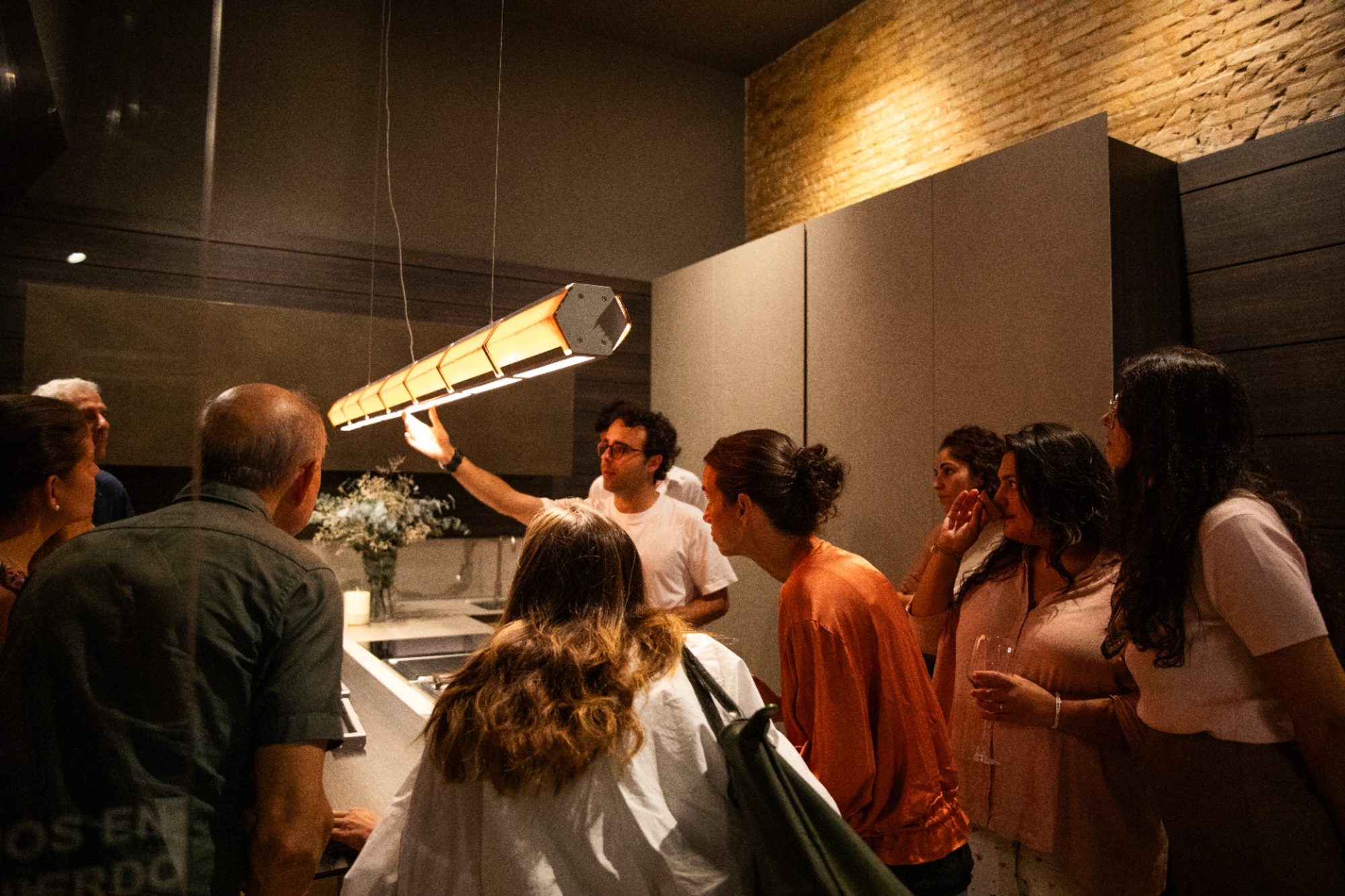
On 29 September, Studio2 hosted a new Other ways of conversing activity, the complementary programme of Un lugar donde pasan cosas that opens the project to other languages, formats and disciplines.
The event brought together professionals and people connected to interior design, artistic creation and the exploration of new materials. On this occasion, the conversation developed around a temporary exhibition by PANAL , a project founded by Pablo Bolumar and Jacobo Taulet, and a selection of works by Valencian artist Tatiana Roig .
Rather than simply presenting a collection of objects, the activity invited visitors to approach design and art through direct experience: looking, touching, listening and understanding the processes behind each piece.
An exhibition to observe, touch and understand
The exhibition transformed the Studio2 showroom into a meeting place for light, texture, craftsmanship, accessibility and material research.
The pieces were not presented merely as finished results. They encouraged conversations about how they had been conceived, the materials involved and the decisions that shaped each creative process.
This approach revealed two different practices connected by a shared intention: to recover a physical relationship with materials and question conventional ways of producing, observing and experiencing design.
PANAL: lighting that begins with the material
PANAL presented its research into beeswax as a material for lighting.
Founded by Pablo Bolumar and Jacobo Taulet, the project combines industrial design, contemporary craftsmanship and material research. Its lamps explore the ability of beeswax to filter and diffuse light, creating organic surfaces with a warm and changing presence.
The project begins with a reflection that precedes the finished object: where the material comes from, how it is obtained, which processes it allows and how design can relate more responsibly to the ecosystems on which it depends.
This regenerative perspective understands sustainability as more than reducing an object’s impact. It considers whether production can also contribute to caring for the natural and social systems that make it possible.
Tatiana Roig: art that can also be touched
Tatiana Roig shared an artistic practice deeply connected to material experimentation.
The artist explained how research and the direct manipulation of natural, reclaimed and construction materials form an essential part of her creative process. This method gives every piece its own texture, relief and individual character.
One of the most significant aspects of her work is its tactile nature. Her pieces are intended to be observed but also touched, opening the artistic experience to blind and partially sighted people and proposing a relationship with art that does not depend exclusively on vision.
Accessibility is therefore not introduced as a later addition. It forms part of the original conception of the work and creates new ways of sensing, interpreting and sharing artistic creation.
The showroom as a cultural space
The dialogue between PANAL and Tatiana Roig transformed the showroom into a place where design could be experienced through the senses and through conversation.
The purpose was not simply to contemplate the pieces, but to understand how they were made, the research they contained and the questions they could raise around production, accessibility and contemporary material culture.
Through this activity, Un lugar donde pasan cosas continues to strengthen its cultural programme and Studio2’s relationship with Valencia’s creative ecosystem.
The space functions not only as a place of display but as a meeting point for the city, design, architecture, art, materials and the creative community.
Next conversation: Who does the city belong to?
The programme will continue on 15 October with Who does the city belong to? , a conversation between Vicent Molins and Diego Blanco Prieto about tourism, housing, gentrification, Valencian identity, urban marketing and the narratives that shape the contemporary city.
Another opportunity to gather around the kitchen and consider, from different perspectives, how we want to inhabit Valencia.